
How Jiu-Jitsu Builds Confidence and Helps Kids Handle Bullies
July 6, 2026
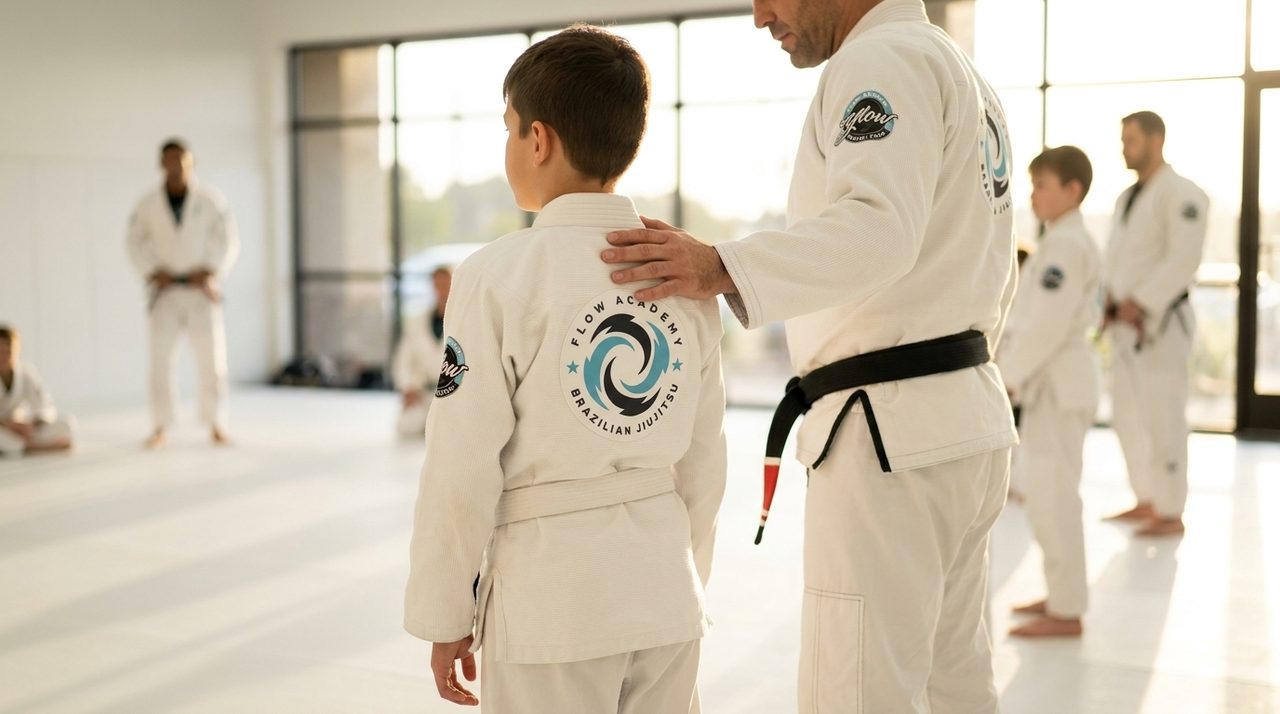
It's the middle of July, the valley is running well past a hundred degrees, and a lot of Indio parents are looking for something that gets their kid off the couch and out of the heat before school starts back up. We hear the same worry from a lot of them, usually quietly, at the edge of the mat: my kid is being picked on, and I don't know how to help.
Here is the honest answer we give. Jiu-Jitsu is not about teaching a child to fight back. It's about giving a child the kind of quiet confidence that makes bullies lose interest in the first place. Bullies tend to look for a target who shrinks. A kid who stands a little taller, makes eye contact, and doesn't panic is a much harder target, and that calm is exactly what months of steady training build.
Why confidence comes from the mat, not a pep talk
You can tell a child to believe in themselves all day and it won't stick. Confidence that lasts comes from doing hard things and surviving them. In our kids and youth classes, a student works with a partner, gets put in an awkward spot, and figures out how to stay calm and work their way out. That small loop — pressure, breathe, solve — repeats every single class. Over a few months it stops being a drill and starts being how the kid handles stress everywhere, including a tense moment at school.
It matters that Jiu-Jitsu is a grappling art. A child learns to control a situation and create space without throwing a punch. That's the message we want a nervous parent to hear: the goal is never to send your kid out looking for a fight. It's to give them the composure to defuse one, and the physical confidence to protect themselves if they truly have to. If this is what you are hoping for your child, book a free class and let them try one.
What that looks like in an Indio class
Our youth Jiu-Jitsu runs Tuesday and Thursday, split by age — ages 6 to 9 at 5:00 PM and ages 10 to 14 at 6:00 PM. Classes are grouped by age and stage, so a smaller or shier kid isn't thrown in with much bigger, more experienced kids. Coaches keep new students close, explain the mat rules first, and build in games that quietly teach real skills. A child leaves the first class having done something they couldn't do an hour earlier, and that first small win is where confidence starts.
We also see the change show up off the mat. Parents tell us their kid started making eye contact when they talk, handling a lost match or a hard drill without melting down, and treating other kids in the room with more patience. That's the part that carries into a classroom or a hallway. A kid who has learned to stay composed when a bigger training partner is on top of them doesn't rattle so easily when someone tries to get under their skin at school.
A few things worth knowing
Your child doesn't need any experience, and shy kids often open up faster than families expect because the room is positive and the coaching is close. The first class is free, so you and your child can watch a session, meet the coaches, and decide together whether it feels right. And if your family uses a charter or homeschool program, we're an approved vendor with Mission Vista, Excel Academy, and Elite Academic Academy — ask us how that works for you.
If your child has been coming home smaller than they left, come watch one class this summer. It's a better use of a hot afternoon than another screen, and it might be the thing that helps them stand a little taller by the time school starts.
Book a free class for your child